
'/%3e%3cdefs%3e%3clinearGradient%20id='prefix__paint0_linear_4737_37157'%20x1='3.018'%20y1='23.6'%20x2='44.925'%20y2='24.977'%20gradientUnits='userSpaceOnUse'%3e%3cstop%20stop-color='%231CB7FF'/%3e%3cstop%20offset='.502'%20stop-color='%232FF58B'/%3e%3c/linearGradient%3e%3c/defs%3e%3c/svg%3e)


England World Cup legend Nobby Stiles died with dementia caused by heading 140,000 footballs during his iconic career, coroner rules
Jul 15 2026 16:49 · By Henry Clark · 2 Reads


England
World Cup winner Nobby Stiles died with a brain condition caused by repeatedly heading a football, a coroner has ruled.
Stiles, 78, a former
Manchester United
footballer and 1966 World Cup winner, died with severe dementia and had headed a football around 140,000 times during the course of his career, Stockport Coroner’s Court heard at the inquest into his death.
Expert analysis of his brain showed his severe dementia was as a result of Alzheimer’s disease but also the condition, chronic traumatic encephalopathy (CTE), which has been associated with head trauma from heading a ball.
Neuro-pathology expert, Dr Daniel Du Plessis told the court: 'I’m quite convinced his heading the football that many times has caused his CTE.'
Nobby Stiles won 28 caps for England and was part of the team that won the World Cup in 1966
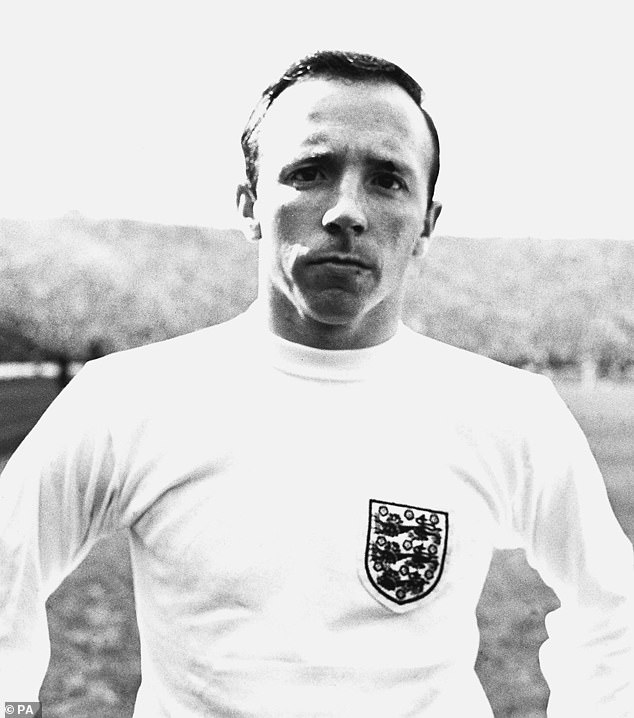
The former Manchester United midfielder passed away in October 2020 at the age of 78
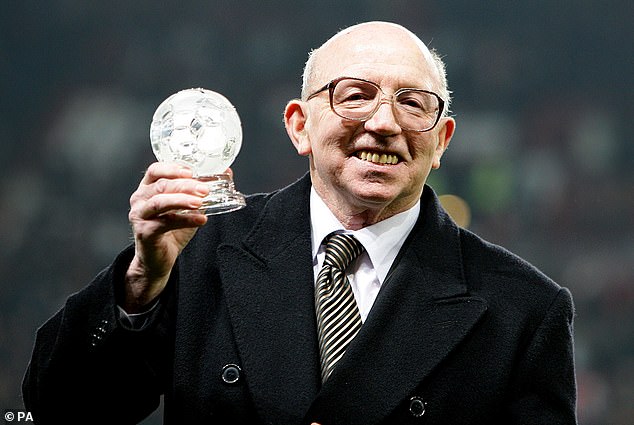
Alison Mutch, senior coroner for South Manchester, asked Dr Du Plessis: 'You are saying repeated heading of the ball is the cause of his CTE?'
'Yes,' Dr Du Plessis replied.
Stiles, born in Collyhurst, Manchester in 1942, was a tough-tackling defensive midfielder, capped 28 times by England and played nearly 400 times for Man Utd.
He passed away in a care home on October 30 2020, having been left bed-bound by his severe dementia.
In January 2024 his family raised the possibility of CTE as contributing to his death and Dr Du Plessis examined brain tissue samples to reach his medical conclusions.
Stiles’ family have been campaigning for football authorities to do more to help ex-players cope with injuries they claim were caused during their playing days.
Stiles’ son John has previously said that football had 'killed' his father.
Mr Stiles told the hearing: 'My dad was very humble, he just happened to have achieved quite a lot.
'It never really changed him. If you went into his house you would never know he was a footballer.
'He was very much a family man, football was left at the door. The family was always the first priority.'
Coroner Ms Mutch said to Mr Stiles it was 'quite strange we are having this conversation on a day like this' but the witness said his father 'never talked, he never bragged' about being a World Cup winner.
He added: 'He was proud of it but we were always much more proud of the father he was than the footballer.'
Mr Stiles told the court his father loved Manchester United and the Busby Babes, joining the club as an apprentice aged 15 in 1957.
He said he had watched his father during his training and playing days and estimated he headed the ball around 40 times a day, for five days a week, over a career in the game stretching to 17 years, calculating a 'conservative' estimate of 136,000 headers in total.
And he said footballs when his father played weighed around 16 ounces but would get heavier when wet.
He told the court, while modern balls no longer absorb water, studies have shown heading even a modern ball is equivalent to around 80% of the impact of a boxer’s punch.
Mr Stiles said that when his father was in his late 50s and early 60s his family noticed he began forgetting things and repeating himself.
In 2010 he sold his winning medals to pay for his care as his mental struggles progressed, leaving him with increasing anxiety and a sense of doom.
'To be honest with you, he was frightened,' Mr Stiles said of his father.
John Stiles is head of the Football Families for Justice (FFJ) group which is calling on the football authorities to do more for ex-players.
He is among dozens of former footballers and their families suing the Football Association, the Football Association of Wales and the English Football League over claims they were 'negligent and in breach of their duty of care' to the former players.
Lawyers for the former players and their families have previously said football bodies knew or should have known that repeatedly heading a ball in training and during matches was likely to cause brain injuries, and that the risks were known for decades.
In March this year lawyers for the Football Association told the High Court it has 'not been established by science' that heading a ball or 'occasional' concussion can lead to permanent brain damage.
In January an inquest into the death of Gordon McQueen, 70, an ex-Scotland, Manchester United and Leeds United defender, found that heading the ball was 'likely' to have contributed to a brain injury which was a factor in his death.
McQueen was also diagnosed with CTE.
McQueen’s TV presenter daughter Hayley McQueen said England’s 1966 World Cup-winning team had now been 'pretty much wiped out' by neurodegenerative disease.
The FA co-funded with the Professional Footballers’ Association a 2019 study that found footballers were three-and-a-half times more likely to die of neurodegenerative disease than age-matched members of the general population.
The FA is phasing out all heading in youth football up to under-11s by 2026.