
'/%3e%3cdefs%3e%3clinearGradient%20id='prefix__paint0_linear_4737_37157'%20x1='3.018'%20y1='23.6'%20x2='44.925'%20y2='24.977'%20gradientUnits='userSpaceOnUse'%3e%3cstop%20stop-color='%231CB7FF'/%3e%3cstop%20offset='.502'%20stop-color='%232FF58B'/%3e%3c/linearGradient%3e%3c/defs%3e%3c/svg%3e)


Lionel Messi’s greatest myth collapsed at the 2026 World Cup
Jul 22 2026 19:18 · By ROBERTO ORTEGA · 9 Reads


For the first time, he was unrecognizable
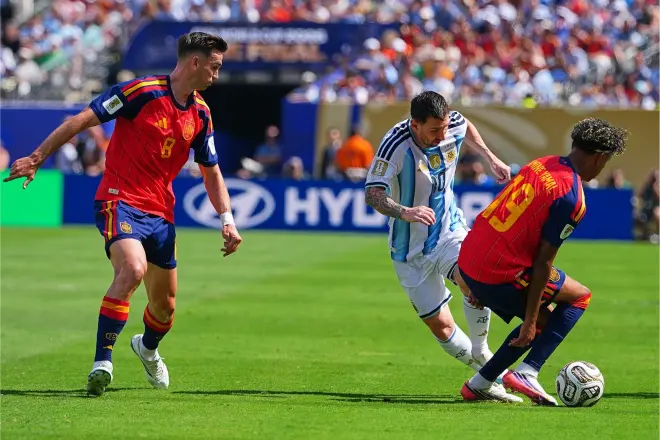
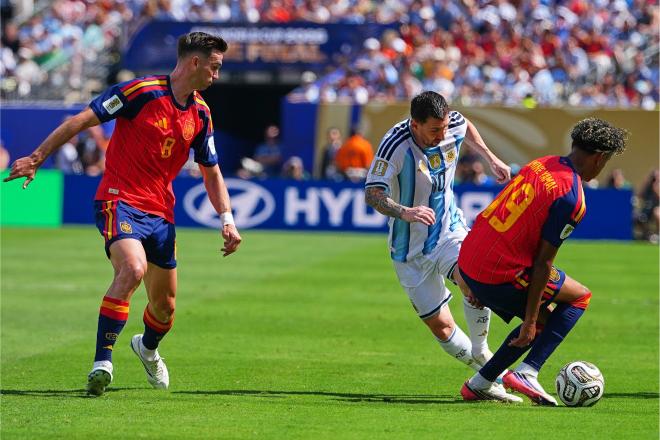
For nearly twenty years, the soccer world insisted on the same idea: Lionel Messi was not from this planet. The phrase began as a way to describe his talent, but it eventually became an explanation for almost everything he did on the field. He was the player who made the impossible look completely natural and who also seemed immune to the emotions that consume every other player.
Because human beings make mistakes. They get angry when they lose, complain to referees, argue with opponents, feel frustrated and sometimes react in ways they later regret. Soccer is filled with those moments. Think of almost any major final and you will find players overcome by anger or helplessness. Messi, however, always seemed to exist outside of all that. “Messi was from another planet.”
The day Messi came down from another planet
For years, it seemed as though nothing and no one could pull him away from that place, from that planet. While others responded with shoves or complaints, he simply kept playing. If he was fouled, he got back up. If someone provoked him, he almost always chose silence. His response came through an impossible pass, a dribble or a goal. That calm demeanor helped create an image that went far beyond his talent: that of a player who seemed incapable of losing control.
That is why perhaps the most memorable angry moment of his entire career remains the famous, “¿Qué mirás, bobo? Andá para allá”. It is curious that the scene became so viral because, compared with the reactions of many other soccer stars, even that moment seemed surprisingly restrained. If that had been Messi’s biggest emotional outburst in nearly two decades, then the idea that he was “an alien” still made sense.
Then came the 2026 World Cup, a tournament unlike any that had come before it for many reasons, some of which even changed the traditional way soccer was played. For the first time, that image began to fall apart.
From the opening match, Messi displayed gestures that were not typical of him. The controversial challenge on Aïssa Mandi against Algeria reflected badly on him because he continued scoring goals and setting records that he might never have achieved had he been shown a red card for that tackle.
Combined with his constant arguments with referees during several matches, the tension that continued building as the tournament progressed revealed a different Messi. Not necessarily a worse player, but a much more human one, reacting to everything and, above all, behaving in a way that was very different from what we had grown accustomed to seeing.
The defining moment came after the final. While Spain celebrated the championship, Messi stood with his back turned during the ceremony alongside almost the entire Argentine squad. Only “Flaco” López remained facing the Spanish flag and, in a way, “turned his back” on his teammates.
At that precise moment, the player who had once been described as being from another planet showed that he was human after all. The pain, anger and frustration were so overwhelming that he could not control them. Instead of leading the team, helping his teammates accept defeat and doing the right thing, losing with dignity and holding their heads high he reacted like any other human being: angry and upset.
The reaction became a global talking point. It depended entirely on him, and it was at that very moment that Messi's greatest myth came crashing down. After all, he really is from this planet.